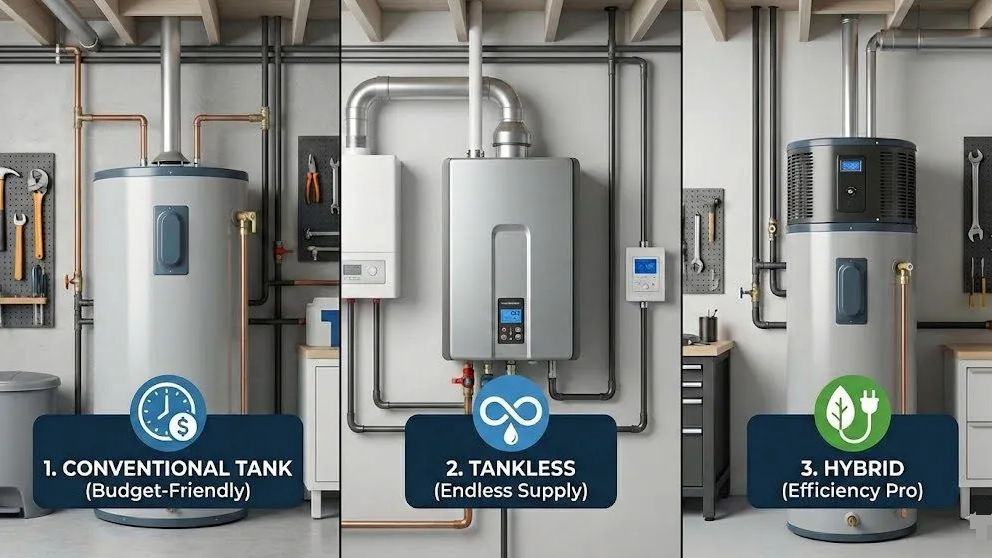
Waking up to an icy shower means your water heater is failing, but choosing a replacement does not have to be difficult. At New Flow Plumbing, we help you solve the no hot water problem by matching your family’s size and budget to the right technology. This guide compares the low cost of a traditional storage tank, the endless hot water of a tankless system, and the high energy savings of a hybrid heat pump to help you lower your bills and restore your home’s comfort.
Why the Right Water Heater Matters
Choosing the wrong water heater affects both your daily comfort and your monthly budget. If you buy a unit that is too small, you will find yourself running out of hot water halfway through a shower. If you choose an inefficient model, you might end up paying far more in gas or electric bills than necessary.
On the other hand, the right water heater will provide a steady stream of hot water whenever you need it while keeping your energy costs low. To make the best decision, you need to understand the three most popular options found in modern homes.
1. The Conventional Storage Tank Water Heater
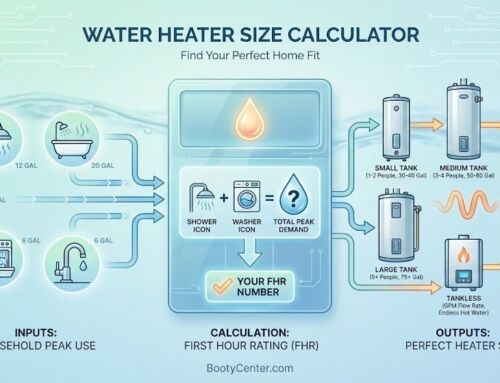
This is the most common type of water heater, and likely the one you grew up with. It consists of a large metal cylinder, usually holding 30 to 50 gallons of water, standing in your garage, basement, or utility closet.
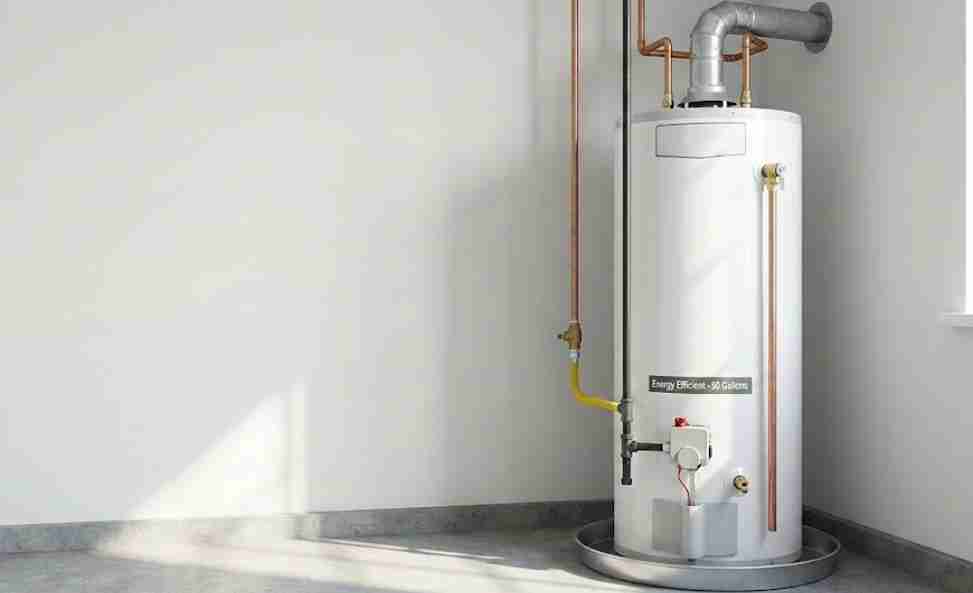
Think of the storage tank like a giant tea kettle that never turns off. It fills with cold water and heats it to a set temperature, keeping that water hot 24 hours a day so it is ready whenever you turn on the tap. This makes it the “old reliable” choice for many households.
For homeowners on a budget, this is often the most attractive option because the upfront cost is generally lower than other types. It is also the easiest to install if you are simply swapping out an old tank for a new one. However, there is a downside. Because the tank has a limited amount of water, you can run out if multiple people shower back-to-back. Additionally, it uses energy to keep the water hot even when you aren’t home, which is less efficient than newer technologies.
2. Tankless Water Heaters (On-Demand)
Tankless water heaters are rapidly growing in popularity for good reason. Often called “on-demand” units, these are small boxes mounted on a wall rather than big tanks taking up floor space.
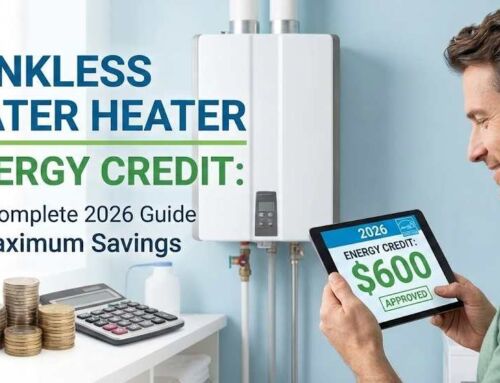
The magic of a tankless system is in how it operates. It does not store water. Instead, when you turn on the hot water tap, cold water travels through a pipe into the unit where a gas burner or electric element heats it instantly. As long as the tap is on, you have hot water. When you turn the tap off, the heater shuts down.

This is the perfect solution for large families who are tired of fighting for the shower. With a tankless unit, you effectively have endless hot water. It is also a massive space saver, freeing up room in your garage or closet for storage. While these units cost more to purchase and install initially, they can last over 20 years and will significantly lower your monthly energy bills since you only pay to heat water when you actually use it.
3. Hybrid (Heat Pump) Water Heaters
If your primary goal is cutting your monthly electricity bill, the hybrid water heater is the technology for you. Visually, it looks similar to a standard tank, but it operates very differently.
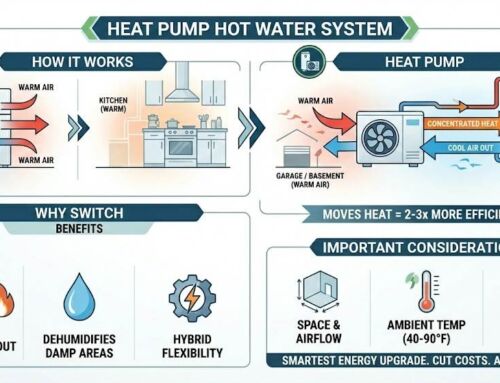
You can think of a hybrid heater like a refrigerator working in reverse. While a fridge pulls heat out of a box to keep food cold, a heat pump pulls heat from the air in your garage or basement and transfers it into the water tank. It uses electricity to move heat rather than create it, making it incredibly efficient.

These units are excellent for eco-friendly homeowners and work exceptionally well in warmer climates where there is plenty of ambient heat to draw from. They can save you hundreds of dollars a year on electricity. The trade-off is that they typically require more physical space for airflow and have a higher upfront price tag than a standard tank, but the long-term savings often pay for the investment.
Warning Signs That You Need a Replacement
You generally do not need a new unit until the old one starts to fail, but waiting for a flood is risky. You can often spot trouble before it becomes a disaster by watching for a few key signals.
The most obvious sign is rusty water. If your hot water comes out brown or rust-colored, it usually means your tank is corroding from the inside. You might also hear loud rumbling or banging noises, which indicates that sediment has built up at the bottom of the tank and is causing it to overheat. Finally, if you see any water pooling around the base of the heater, you have a leak that needs immediate attention. If your unit is over 10 or 12 years old, it is living on borrowed time and should be inspected soon.
The New Flow Plumbing Difference
Replacing a water heater is rarely a do-it-yourself job. It involves handling gas lines, high-voltage electricity, and carbon monoxide venting, all of which require a professional touch to ensure your family remains safe.
At New Flow Plumbing, we do not just sell you a box. We evaluate your home’s size, your family’s water usage habits, and your budget to recommend the perfect solution. Whether you need a quick repair on an existing tank or a full upgrade to a modern tankless system, we ensure the installation is done right the first time.
FAQs

Arman Grigoryan
Founder & President of New Flow Plumbing
Arman Grigoryan is the founder and president of New Flow Plumbing, proudly serving Los Angeles, Sacramento, and surrounding areas. With extensive experience in plumbing diagnostics, he leads a skilled team specializing in advanced sewer and drain camera inspections to quickly identify problems and deliver lasting solutions. Arman is dedicated to using the latest technology to provide reliable service, honest answers, and dependable results for every customer.