The primary benefits of a tankless water heater are providing an endless supply of hot water on demand, lowering energy bills by eliminating standby heat loss, and saving valuable floor space with a compact wall-mounted design. Unlike traditional tanks that typically last 10 to 12 years, tankless units are built to last over 20 years, making them a long-term investment that offers superior durability and fresh, clean water that hasn’t been sitting in a storage tank.
While the upfront cost is higher than a standard model, understanding the specific mechanics of these benefits helps clarify why so many homeowners are making the switch.
Benefit #1: Truly Endless Hot Water (If Sized Right)
The biggest selling point of a tankless unit is arguably the lifestyle upgrade. A traditional tank stores 40 to 60 gallons of hot water. Once that water is gone, you have to wait 30 to 60 minutes for the tank to reheat.
A tankless water heater works differently. It has powerful burners that heat water instantly as it flows through the pipe. It doesn’t store water; it creates it on demand. This means you can take a shower, then your teenager can take a shower, and then you can run the dishwasher and the water never runs cold.
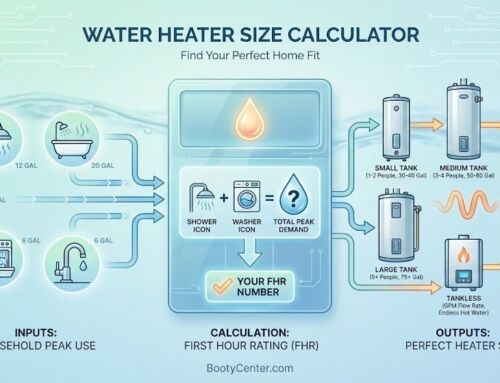
The “Fine Print” You Need to Know: While the water is “endless,” it is not “infinite” all at once. Every tankless unit has a Flow Rate limit, measured in Gallons Per Minute (GPM). If you try to run two showers and the washing machine at the exact same time, you might exceed the unit’s ability to heat the water fast enough.
Pro Tip: When shopping, don’t just look for “tankless.” Look for a unit with a GPM rating that matches your family size. A family of four usually needs a unit that handles 8–10 GPM.
Benefit #2: Significant Energy Savings and Lower Bills
Traditional tank heaters are like keeping a pot of water boiling on the stove 24/7, just in case you need a cup of tea. They heat and reheat the water all day and night, even when you are at work or sleeping. This is called “standby energy loss.”
Tankless heaters eliminate this waste entirely. They only burn gas or use electricity when you turn on the tap. Because they are not constantly running, they are 24% to 34% more energy-efficient than traditional tanks.
The Real ROI (Return on Investment): It is important to be realistic about money. Tankless units cost more upfront to install, often double the price of a standard tank due to venting and gas line requirements. While you will see lower monthly utility bills immediately, the “payback period” (the time it takes for savings to cover the installation cost) can take several years. The primary financial benefit here isn’t a quick cash-out; it’s the protection against rising energy costs over the next two decades.
Benefit #3: Space Saving Design
Real estate in your home is valuable. Traditional water tanks are bulky metal cylinders that dominate basements, garages, or utility closets. They can hold 400+ pounds of water and take up roughly 9 to 12 square feet of floor space.
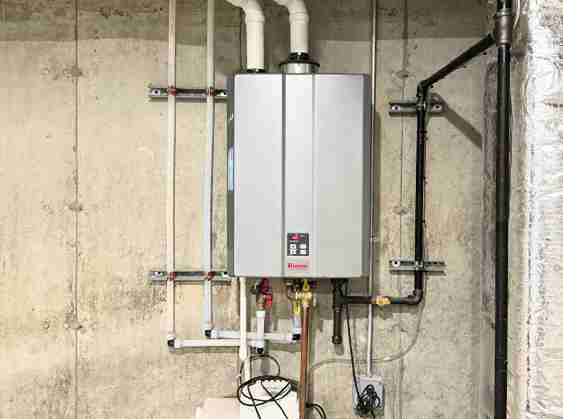
By comparison, a tankless water heater is about the size of a carry-on suitcase. It mounts on the wall, freeing up floor space entirely.
- What this means for you: You can reclaim that closet for storage, put a shelf under the heater, or simply declutter your garage. For smaller homes or condos, this space recovery alone can make the switch worth it.
Benefit #4: A Longer Lifespan (20+ Years)
When you buy a standard tank water heater, you are essentially renting it for about 10 years. After a decade, the risk of the tank rusting and leaking increases dramatically. A burst water tank can cause thousands of dollars in flood damage.
Tankless units are built differently. Because they don’t hold standing water, they are not as prone to corrosion. With proper maintenance, a tankless unit can last 20 to 25 years, effectively twice as long as a traditional tank. This effectively cuts your long-term replacement costs in half, as you won’t need to buy a new unit every decade.
The “Hidden” Comfort Factor: Clean, Fresh Water
A benefit rarely discussed is water quality. In a traditional tank, water sits inside a metal drum for hours or days. Over years, sediment, rust, and scale build up at the bottom of that tank. (If you have ever drained an old water heater, you have seen the brown sludge that comes out).
With a tankless system, water is heated instantly as it passes through copper or stainless steel pipes. There is no storage tank for rust to accumulate. You are showering in and cooking with fresh water that came directly from the main supply line, heated seconds ago
Modern Solutions to Old Problems
In the past, older tankless models had a quirk known as the “Cold Water Sandwich.” This happened if you turned off the shower to lather up and then turned it back on you’d get a brief burst of cold water before the heater kicked in again.
Modern, high-quality units (like those from Rinnai or Navien) have solved this with Recirculation Technology. Many new models have a built-in buffer tank or a recirculation pump that keeps a small amount of hot water ready at the tap. This ensures that “instant” really means instant, eliminating the wait time and water waste often associated with older plumbing systems.
Conclusion
Switching to a tankless water heater setup is one of the most significant upgrades you can make to your home’s plumbing system. While the initial installation cost is higher than a standard tank, the investment pays dividends through superior comfort, lower monthly energy usage, and a significantly longer lifespan.
For large families tired of rationing hot water, or homeowners planning to stay in their property for the long haul, the tankless system is the clear winner. However, the difference between a frustrating experience and a perfect upgrade often comes down to the quality of the installation and sizing.
At New Flow Plumbing, we believe in honest advice over aggressive sales pitches. Whether you need a high-capacity tankless system to handle winter groundwater temperatures or a reliable standard tank for a smaller household, our experts are here to help you calculate the math. We assess your home’s unique infrastructure to deliver a solution that guarantees comfort for decades to come, ensuring your investment is protected from day one.
FAQs

Arman Grigoryan
Founder & President of New Flow Plumbing
Arman Grigoryan is the founder and president of New Flow Plumbing, proudly serving Los Angeles, Sacramento, and surrounding areas. With extensive experience in plumbing diagnostics, he leads a skilled team specializing in advanced sewer and drain camera inspections to quickly identify problems and deliver lasting solutions. Arman is dedicated to using the latest technology to provide reliable service, honest answers, and dependable results for every customer.