Basement Sewer Odor is the presence of foul-smelling gases, primarily Hydrogen Sulfide (H₂S) and Methane (CH₄), within the residential building envelope. These gases result from the anaerobic decomposition of organic waste matter within the sanitary sewer system.
The detection of a rotten egg smell indicates a breach in the plumbing trap seals or a structural failure in the drain-waste-vent (DWV) system. Immediate remediation is required, as Hydrogen Sulfide is a toxic gas that affects the central nervous system.
Health Implications of Sewer Gas Exposure
Prolonged inhalation of sewer gas causes specific physiological symptoms due to oxygen displacement and toxicity.
- Olfactory Fatigue: The olfactory nerves become paralyzed after continuous exposure, causing the occupant to believe the smell has dissipated when the gas concentration remains high.
- Neurological Symptoms: Headaches, memory loss, and loss of concentration occur due to reduced oxygen transport to the brain.
- Respiratory Distress: Eye irritation, lung irritation, and dyspnea (trouble breathing) result from the acidic nature of the gas.
- Severe Toxicity: High concentrations lead to seizures, coma, and potential fatality.
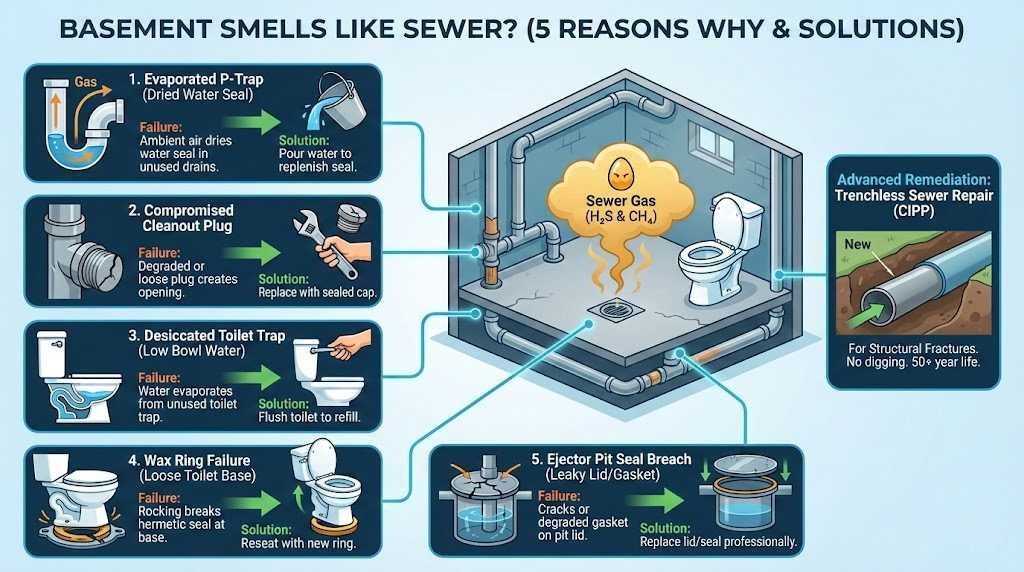
5 Structural Causes of Sewer Odor Infiltration
The ingress of sewer gas into a basement is caused by the failure of mechanical barriers designed to separate the living space from the municipal sewer main.
1. Evaporation of the Hydrostatic Barrier (Dried P-Traps)
A P-Trap (or U-bend) is a plumbing fixture designed to retain a water seal that blocks sewer gas migration.
- Mechanism of Failure: In infrequently used drains (guest bathrooms, basement floor drains, utility sinks), the water seal evaporates due to ambient air circulation. Once the water level drops below the dip of the pipe, the barrier is broken.
- Remediation: Replenishing the water seal restores the hydrostatic barrier. Pouring one gallon of water into the drain re-establishes the block against gas infiltration.
2. Compromised Cleanout Plug Integrity
The Sewer Cleanout is a capped pipe providing access to the main sewer line for maintenance.
- Mechanism of Failure: The threaded plug sealing the cleanout may degrade, crack, or be loosely reinstalled after a snaking procedure. This creates a direct atmospheric opening to the sewer main, bypassing the P-trap entirely.
- Remediation: Replacement of the threaded plug with a properly sized PVC or brass cap, sealed with Teflon tape, eliminates the gas leak.
3. Desiccation of Toilet Trap Seals
Toilets rely on an internal S-trap filled with water to prevent gas entry.
- Mechanism of Failure: Similar to floor drains, unused toilets suffer from water evaporation. The water level in the bowl lowers until the internal trapway is exposed to the sewer line air.
- Remediation: Flushing the toilet immediately refills the bowl and trapway, restoring the gas seal.
4. Failure of the Closet Flange Wax Ring
The Wax Ring creates a gastight and watertight seal between the toilet outlet and the floor flange (Closet Flange).
- Mechanism of Failure: If the toilet is not securely bolted, rocking motions compress and deform the wax ring, breaking the hermetic seal. This allows gas to escape at the base of the toilet.
- Remediation: Reseating the toilet is required. The fixture must be lifted, the old wax removed, and a new wax ring (or synthetic alternative) installed to re-establish the seal.
5. Ejector Pit Seal Breach
An Ejector Pump (or sewage grinder pump) moves waste from basement fixtures up to the main gravity line. The pump sits in a sealed Ejector Pit (Sump Basin).
- Mechanism of Failure: The lid of the ejector pit must be hermetically sealed and vented outdoors. Cracks in the lid, a degraded gasket, or improper venting allows sewer gas to accumulate in the basement.
- Remediation: This requires a structural inspection of the pit components. If the lid or gasket is compromised, professional replacement is necessary to ensure the system is airtight.
Advanced Remediation: Trenchless Sewer Rehabilitation
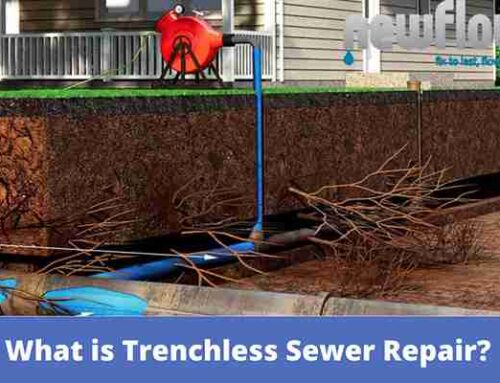
If the source of the odor is not a trap or seal failure, the cause is a structural fracture in the main sewer lateral. Cracks in the pipe allow gas to exfiltrate into the surrounding soil and seep into the basement through the foundation.
Trenchless Sewer Repair (Cured-in-Place Pipe or CIPP) is the preferred engineering solution for correcting structural fractures without excavation.
- Cost Efficiency: Trenchless technology reduces project costs by 30% to 40% by eliminating the need for demolition and surface restoration.
- Operational Speed: The repair is completed in hours rather than days.
- Material Longevity: The epoxy-resin liner has a service life of 50 to 100 years, resisting root intrusion and chemical corrosion.
Conclusion: Securing the Building Envelope
The presence of sewer gas in a basement indicates a failure in the sanitary plumbing system’s integrity. Identifying whether the issue is a simple trap evaporation or a complex sewer lateral fracture is critical for health and safety. New Flow Plumbing provides the diagnostic expertise required to identify the precise point of failure and the technical capability to execute Trenchless Sewer Repair, ensuring a permanently sealed and safe living environment.
FAQs

Arman Grigoryan
Founder & President of New Flow Plumbing
Arman Grigoryan is the founder and president of New Flow Plumbing, proudly serving Los Angeles, Sacramento, and surrounding areas. With extensive experience in plumbing diagnostics, he leads a skilled team specializing in advanced sewer and drain camera inspections to quickly identify problems and deliver lasting solutions. Arman is dedicated to using the latest technology to provide reliable service, honest answers, and dependable results for every customer.