If you are looking for a solution to broken sewer pipes or want to know the best replacement method before a problem arises, you’re in the right place! This article will tell you everything you need to know about trenchless sewer replacement (including cost).

What is trenchless pipe replacement?
First used in the U.S in 1975, trenchless pipe replacement (also called repair) is one the best solutions to fixing sewer pipes. The critical point about trenchless replacement is that it involves no trenches. It’s non-invasive, meaning your home and yard are not torn up to fix a simple pipe. It’s fast and can be completed in only one day. Finally, it’s cost-effective, saving you thousands in clean-up and home repair expenses.
Does trenchless pipe replacement work?
YES! Compared to conventional pipe replacement methods, trenchless technology has become the most recommended solution around. It’s eliminated the need to dig long trenches in your yard, rip up tiles or wood flooring, and the need to chip away concrete slabs. This new technology can be applied where older techniques cannot.
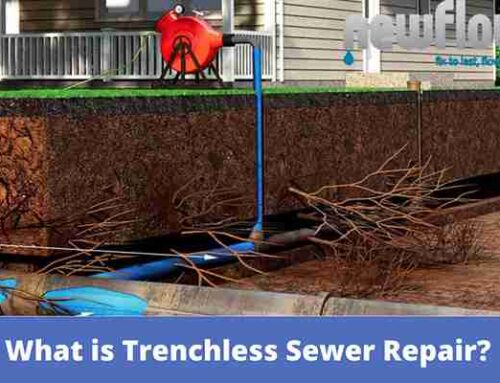
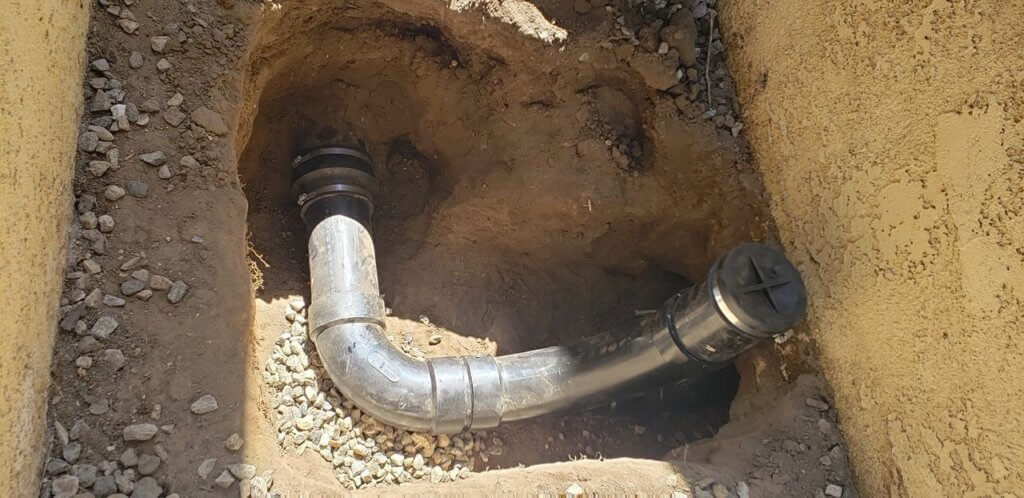
Trenchless pipe replacement only requires one or two access points, often 4ft x 4ft holes on either side of the house. Plumbers can make another access area by pulling a toilet out and using the floor connection. On occasions, some space around the toilet will need to be chipped away, but that is far better than destroying precious wood flooring or unique kitchen tile. The collateral damage of trenchless drain pipe replacement is nothing compared to the effects of traditional methods.
Check out more about – Signs of broken underground drain pipes
Types of trenchless pipe replacement
There are two types of trenchless pipe replacement; pipe lining and pipe bursting. They both need to meet specific requirements to ensure your pipes qualify for replacement, such as the pipe’s structural integrity. Trenchless pipe replacement always begins with a pipe cleaning solution such as Hydro-jetting.
Pipe lining
Also called structural pipe lining, or cured-in-place-pipe lining (CIPP), pipe lining involves a one-of-a-kind, epoxy-impregnated liner to create a new pipe directly inside your old one. CIPP is designed to last up to 50 years!
CIPP can be used on sewer pipes that have corroded over time or have cracked and are now experiencing problems with invasive tree roots and soil. After lining, the roots and dirt won’t be able to get back into the pipe.
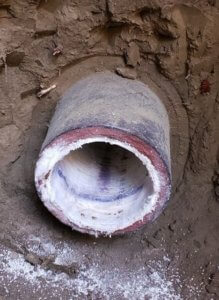
Pipe lining can be considered replacement or repair depending on whether the whole pipe length will be lined or just a section. If just a section of pipe (a spot repair) is lined, it is considered a repair. If you line the whole pipe from start to finish, it is like getting a brand new pipe installed (aka replacement).
Trenchless pipe lining can be used on:
The pipe lining process
- A CCTV sewer camera first inspects your pipe.
- The pipe is then cleaned using hydro jetting. We make sure the pipe is back to its original diameter (or as close to it as possible).
- Next, we insert an epoxy-impregnated liner into the old pipe. Inside the liner is another layer called a bladder, inflating and pressing the epoxy against the pipe. After a few hours, the epoxy cures, and now you have a new pipe directly inside the old one.
- The next step involves reinstating any branches that were covered over during the pipe lining process. This is done robotically using special equipment.
- Lastly, we perform another CCTV inspection to ensure everything is completed and then fill in any pits or reinstall any fixtures we removed.
Note: The pipe’s diameter does become slightly smaller, but it increases your new pipe’s flow capacity due to the new material’s slickness.
Read more about – The pros and cons of epoxy pipe lining
Pipe bursting
Pipe bursting is where a new HDPE (high-density polyethylene) pipe is attached to a winch with a cone-shaped bursting head and pulled through the damaged line. The damaged pipe is broken apart as the new one takes its place. Pipe bursting can replace 600+ feet of pipe. It has some limitations that make it more ideal for straight runs of pipe and horizontal pipe. This is an environmentally-friendly process that involves no chemicals. Pipe bursting can also replace a functioning pipe with a larger one to increase the flow rate. Pipe bursting is a permanent solution that lasts 50 to 100 years.
The pipe bursting process
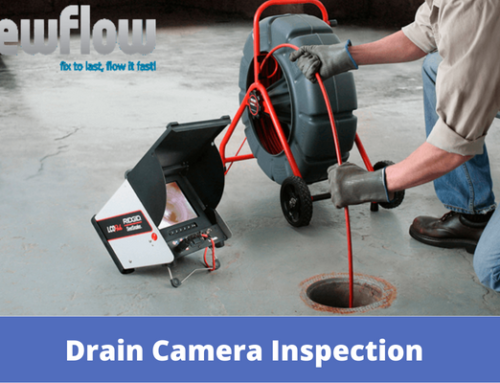
- We inspect the pipe with a special CCTV sewer camera to assess the damage and look for blockages. The sewer line inspection is non-invasive, meaning it does not damage your property or pipes and only takes 30 minutes to complete.
- The next step involves digging two small pits (around 4ft x 4ft) to access the damaged pipe.
- The new HDPE (high-density polyethylene) replacement pipe is then attached to a winch with a cone-shaped bursting head and pulled through the damaged line. As this happens, the damaged pipe is broken apart, and the new pipe takes its place. The new HDPE pipe is hooked up to your plumbing system so that the connection is complete.
- Once the repair is complete, the two access points are filled.
- The final step is another sewer camera inspection to make sure everything is running correctly.
How much does trenchless pipe replacement cost?
Pipe lining – $80 to $250 per linear foot. The price depends on various factors, such as the pipe condition, ease of navigation, the amount of cleaning needed before the lining, and the accessibility of the pipe. The total price depend on how much pipe is replaced; for example, 30ft of pipe at the median cost of $165 will be $4,950.
Pipe bursting – $60 to $200 per linear foot. Pipe bursting can replace 600ft+ of pipe. For example, 30ft of pipe at the median cost of $130 will be $3,900. Pipe Bursting is usually cheaper than Pipe Lining.
Note: Conventional sewer repair quotes will be lower than trenchless, but it does not include the cost to clean up the mess and repair the property damage
Who should you call?
If you’re looking for a reliable, professional company mastered in trenchless pipe replacement, call New Flow Plumbing. We serve the Santa Clarita, Glendale, and the greater Los Angeles area. We will assess the situation using a CCTV sewer camera inspection and give you the best solution. Contact us today, check out our current specials, and receive a quote now.
FAQs

Arman Grigoryan
Founder & President of New Flow Plumbing
Arman Grigoryan is the founder and president of New Flow Plumbing, proudly serving Los Angeles, Sacramento, and surrounding areas. With extensive experience in plumbing diagnostics, he leads a skilled team specializing in advanced sewer and drain camera inspections to quickly identify problems and deliver lasting solutions. Arman is dedicated to using the latest technology to provide reliable service, honest answers, and dependable results for every customer.