Every homeowner eventually faces a project or a problem that requires knowing exactly where the plumbing runs underground. You might be planning a new deck, planting a large tree, installing a fence, or dealing with a sudden and messy backup. In all these cases, the most critical piece of information you need is the location of your main sewer line.
This invisible pipe is the highway for all the wastewater leaving your home. Digging without knowing its location can lead to broken pipes, expensive emergency repairs, and significant environmental messes.
This guide provides a step-by-step approach to finding your drainage system safely and accurately without using confusing jargon.
Part 1: How Your Home Plumbing Actually Works
Before heading outside with a shovel, it helps to visualize how your home handles waste. The plumbing system is built like a tree, but it functions in reverse.
The Branches or Drain Lines Every sink, toilet, shower, and washing machine connects to a small pipe. These smaller pipes catch water immediately after use.
The Trunk or The Soil Stack All those small pipes flow into a large vertical pipe usually hidden inside your walls. This stack collects waste from every floor of your house and drops it down to the bottom level.
The Roots or The Main Sewer Line At the foundation of your house, the vertical stack turns sideways and becomes a horizontal pipe. This large pipe runs underground and carries all waste away from your home.
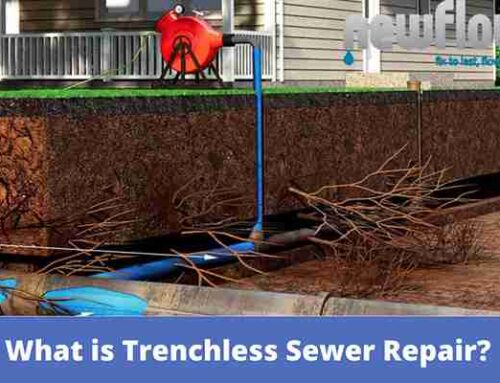
Once this large pipe exits your house, it is called the Lateral Line. It travels through your yard to one of two destinations. It either goes to the City Main which is a massive public sewer pipe usually running under the street, or it goes to a Septic Tank which is a private waste treatment box buried somewhere on your land.
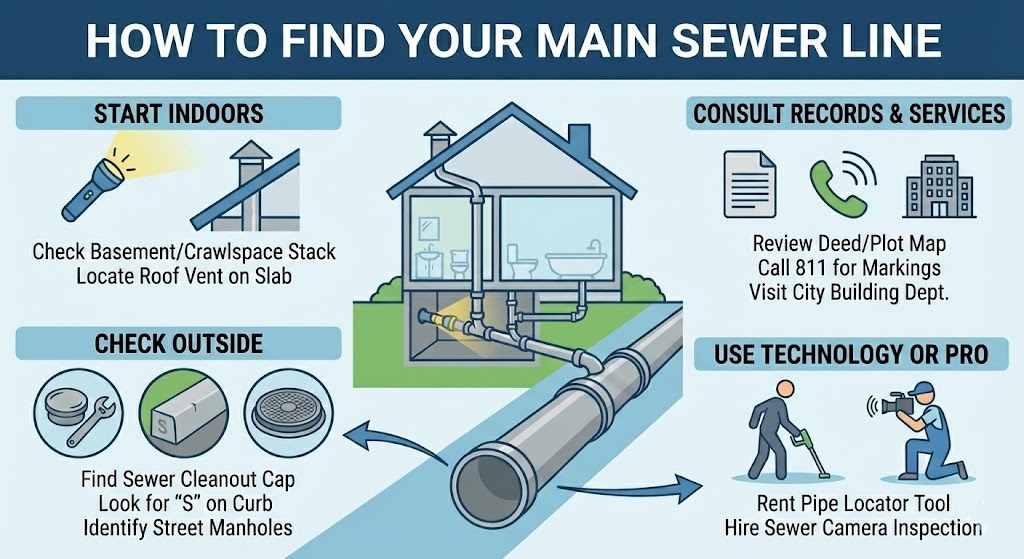
The Goal To find the sewer line, you simply need to trace the path from the stack inside your house to the city connection or septic tank outside.
Part 2: The Indoor Search Method
The easiest way to start is by looking inside your home. If you have a basement or a crawlspace, you have a distinct advantage because the pipes are often visible.
Method A: Homes with Basements or Crawlspaces
-
Go to the Lowest Level Take a bright flashlight into your basement or crawlspace.
-
Locate the Stack Look for a large vertical pipe coming down from the ceiling. It is usually about 4 inches wide which is much thicker than the water pipes.
-
Identify the Material In newer homes, this is usually black plastic ABS or white plastic PVC. In older homes, it is often heavy black painted metal called Cast Iron.
-
Follow the Path Trace this large pipe along the floor or ceiling until it exits through the foundation wall.
-
Mark the Exit Point Note exactly where the pipe goes through the concrete wall.
-
Transfer to Outside Go outside and stand at that exact spot on the exterior wall. Your main sewer line is buried directly beneath your feet and heads away from the house.
Method B: Homes on Slab Foundations
If your home is built on a concrete slab, the pipes are buried inside the concrete so you cannot see them. However, you can often find the Main Stack Vent on your roof.
Go outside and look at your roof. Look for a pipe sticking out of the top, usually above a bathroom or kitchen. The sewer line usually runs straight down from that vent and then out into the yard. This gives you a starting point.
Part 3: Finding the Sewer Cleanout Outside
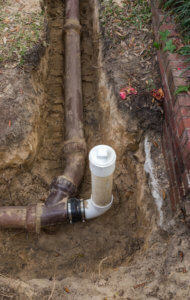
Most building codes require a specific access point called a Sewer Cleanout. This is a pipe that allows plumbers to easily access the line to clear clogs. Finding the cleanout is often the fastest way to locate the entire line.
What to Look For
The Cap Look for a round threaded cap that is roughly 3 to 4 inches wide.
The Look It typically has a square nut on top so a wrench can twist it open.
The Material It is usually White plastic PVC, black plastic ABS, or brass in older homes.
Common Hiding Spots
Near the Foundation Walk the perimeter of your house. Look for a pipe sticking out of the ground or a cap flush with the patio or sidewalk.
Hidden in Landscaping Builders and landscapers often hide cleanouts behind bushes or flower beds to keep them out of sight. Gently check behind shrubs near the kitchen or bathrooms.
Property Line Sometimes the cleanout is located near the sidewalk or street curb. Look for a small concrete or plastic box labeled Sewer or Water.
Pro Tip Once you find the cleanout, you can often assume the pipe runs in a straight line from the cleanout to the street.
Part 4: Street and Sidewalk Indicators
If you cannot find a cleanout or see the pipes, the street itself often holds the answer. City engineers leave permanent markers that indicate where utility lines are buried.
The S Stamp
Walk to the sidewalk or curb directly in front of your house. Inspect the concrete closely for a stamped letter S.
What it means The letter S marks the exact point where the sewer lateral passes under the curb to connect to the city main.
How to use it Stand on the S and look back at your house. Imagine a straight line connecting you to your main bathroom or the point where you think the pipe exits the house. Your sewer line likely follows this path.
Manhole Covers
Look for large round metal covers in the street. These covers provide access to the main sewer line for the city. The city main usually runs down the center of the street. Your home pipe must connect to that main line. Visualizing the connection between your house and the street center can help you estimate the direction of the pipe.
Part 5: Checking Records and Maps
If visual clues are missing, written records are the next best option. This method requires no digging and is often highly accurate.
Contact the Previous Owner
If you recently bought the home, the previous owner is a valuable resource. They may have dealt with plumbing repairs and can tell you exactly where the line is located.
Check Your Deed or Plot Map
When you bought your house, you received a stack of papers. Look for the Deed or a Plot Map. These documents often show the property boundaries and may mark the location of utility easements and sewer lines.
Visit the City Building Department
Municipalities keep detailed records of infrastructure.
Online GIS Maps Many cities now have GIS or Geographic Information System maps online. You can enter your address and view a digital map showing sewer lines, water lines, and property boundaries.
Sewer Cards Call your local Public Works or Building Department. Ask if they have a Sewer Card or Tap Record for your home. This is a diagram filed by the original plumber showing the exact distance of the pipe from the house corners. This public record is usually free.
Part 6: The Call Before You Dig Solution 811
If you are planning any project that involves digging, calling 811 is essential. In the United States, this is a federally mandated free service.
How 811 Works
-
Call Dial 811 a few days before you plan to dig.
-
Wait The service notifies local utility companies such as water, sewer, gas, and electric providers.
-
Marking Professional locators will come to your property and mark the buried lines with paint or flags.
Understanding the Colors
GREEN Sewer and Drain Lines
BLUE Potable Water
RED Electric Power Lines
YELLOW Gas, Oil, or Steam
ORANGE Communication like Phone or Internet
Important Limitation 811 locators typically mark public utilities. They will mark the line in the street up to your property line or meter. In some areas, they may not mark the private portion of the sewer line that runs through your specific yard. Always clarify this with the locator.
Part 7: Using Technology or Pipe Locators
For a precise location without guessing, you can use electronic detection tools. These are available for rent at most major hardware stores.
The Tool Sonde and Receiver
This tool consists of a reel with a stiff cable and a handheld wand.
The Sonde This is a small radio transmitter at the end of the cable.
The Receiver This is a wand that detects the signal from above ground.
How to Use It
-
Insert Push the cable with the Sonde attached into your sewer cleanout. Feed it about 10 to 15 feet into the pipe.
-
Scan Walk above ground with the receiver wand.
-
Detect The wand will beep or light up when it is directly over the Sonde underground.
-
Mark Spray paint or place a flag at that spot.
-
Repeat Push the cable another 10 feet and find the new spot. Repeat this process until you have mapped the entire line.
Part 8: When to Hire a Professional
If you are dealing with a blockage or cannot locate the line yourself, hiring a professional is the most reliable option.
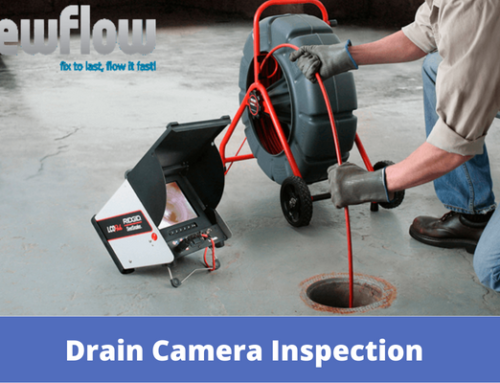
The Sewer Camera Inspection
A professional plumber can perform a camera inspection. They insert a high-resolution waterproof camera into the pipe. This offers two major benefits.
Visual Diagnosis You can see if the pipe is broken, collapsed, or filled with tree roots.
Precise Location The camera head emits a signal that the plumber can track from the surface. This tells you exactly where the pipe is and how deep it is buried.
What to Ask For When calling a plumber, specifically ask for a Sewer Camera Inspection with Line Locating.
Conclusion Why This Knowledge Matters
Locating your main sewer line is a critical part of homeownership. It empowers you to prevent damage by avoiding planting trees or digging fence posts directly over your pipes. It helps you save money by reducing labor costs for plumbers by pointing them directly to the access point. It also helps you plan renovations so you know exactly where you can build additions or decks without interfering with utilities.
New Flow Plumbing, an authority in drainage solutions, emphasizes that knowing your sewer layout is the first step in maintaining a healthy home and avoiding costly emergencies.
By following these steps you can confidently map your drainage system. Start indoors, check for outdoor clues, consult city records, and use professional services if needed.

Arman Grigoryan
Founder & President of New Flow Plumbing
Arman Grigoryan is the founder and president of New Flow Plumbing, proudly serving Los Angeles, Sacramento, and surrounding areas. With extensive experience in plumbing diagnostics, he leads a skilled team specializing in advanced sewer and drain camera inspections to quickly identify problems and deliver lasting solutions. Arman is dedicated to using the latest technology to provide reliable service, honest answers, and dependable results for every customer.