The solution for removing tree roots depends on the severity. For small, early-stage roots, homeowners can attempt temporary fixes using chemical methods like rock salt or specialized foaming root killers. For established clogs and long-term protection, a professional is required to cut and clear the blockage using hydro jetting, followed by a permanent repair solution such as sewer pipe lining.
Why Trees Love Your Sewer Line
Are your drains sluggish? Hearing weird gurgling noises when you flush the toilet? If so, you might have tree roots invading your main sewer line. This is a common and costly issue that needs immediate attention before minor backups turn into a major disaster.
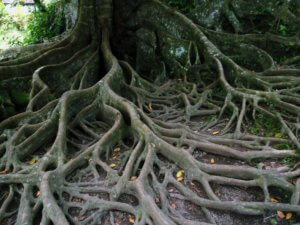
Tree roots are drawn to sewer lines because they offer a consistent source of water and nutrients. They are opportunistic, forcing their way in through tiny, existing holes or cracks in weakened pipes. Once inside, they grow rapidly, creating a dense blockage that restricts flow. If left untreated, they can eventually break the pipe entirely, leading to expensive, extensive repairs.
7 Signs You Have Tree Roots in Your Sewer Line
Identifying the problem early is crucial. Look out for these signs:
- Constant Backups: If multiple fixtures (sinks, showers, toilets) are backing up, the problem is likely in your main sewer line.
- Sewer Odors: Cracks created by roots allow sewer gases to escape. Smelling sewage inside your home or in your yard is a definitive warning sign.
- Slow Drains: Roots shrink the pipe’s effective diameter, forcing waste through smaller spaces and causing water to drain slower than usual.
- Foundation Issues: Roots can cause waste to leak, saturating the surrounding soil. If you have expansive soil (which shifts when wet), this can lead to foundation movement.
- Unwanted Pests: Cracks that let roots in are also large enough for mice, rats, flies, and cockroaches to use as entry points into your property.
- Unnatural Yard Growth: Sewage acts as a natural fertilizer. A patch of lawn that is suddenly much greener or growing faster than the rest could indicate a leak.
- Potholes or Strange Dips: Leaking sewage can wash away or displace soil under your lawn, resulting in noticeable dips or sinkholes.
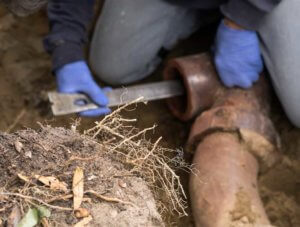
DIY: How to Kill Small Tree Roots in a Sewer Line
These chemical solutions are effective for small, early-stage roots and should be considered temporary fixes only.
1. Using Rock Salt and Sodium Chloride
Rock Salt (the type used on icy sidewalks, not table salt) and Sodium Chloride (table salt) work by creating a hostile, dehydrating environment for the roots.
The Method: Flush approximately 1 to 2 pounds of rock salt (or sodium chloride) down the toilet, adding it in small batches (about $1/2$ pound at a time).
The Wait: Do not use the toilet or any water for at least 8 to 12 hours after the final flush. This gives the salt time to settle in the pipe and dehydrate the roots.
A Word of Caution: Salt can potentially kill not only the roots but also the entire tree and nearby vegetation. It can also be corrosive to older pipes.
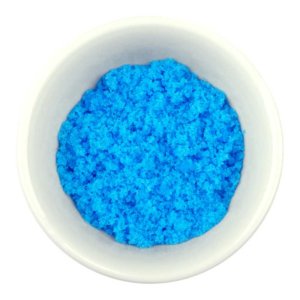
2. Using Copper Sulfate (Bluestone)
Copper sulfate is a common, inexpensive herbicide and algaecide.
The Method: Flush $1/2$ cup of copper sulfate down the toilet, followed by a couple of flushes without the chemical to move the crystals into the line.
Safety: Copper sulfate is toxic to animals. Open windows, keep pets away, and leave the house for a few hours.
Maintenance: This can be repeated once every 6 months to a year as a preventative measure against minor root growth.
Check Local Regulations: Copper sulfate has been banned in certain areas due to its environmental impact, so check with your local authorities before use.
3. Using Foaming Tree Root Killer Herbicide
These are specialized products designed specifically for sewer lines.
The Benefit: Foaming root killers use an herbicide that kills the roots and leaves behind a residue, which helps prevent new roots from growing back immediately.
The Method: Follow the instructions precisely on the label of the product purchased from a hardware or garden store.
Professional Removal: Cutting the Blockage
For established clogs, professional intervention is necessary.
Mechanical Removal with an Auger or Snake
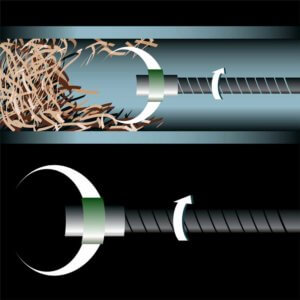
A specialized mechanical auger includes a cable with a cutting head attachment. This powerful tool is fed into the sewer line to physically cut through dense root masses. After the roots are cut, they are flushed out of the line.
Hydro Jetting (Our Preferred Method)
At New Flow Plumbing, we use hydro jetting to remove tree roots. This process uses highly pressurized water (up to 4,000 psi) to scour the inside of the pipe, cutting through tough roots, grease, and sludge, ensuring the pipe’s full diameter is restored.
The Permanent Solution: How to Stop Roots Forever
All chemical and mechanical removal methods listed above are temporary. The cracks and holes that allowed the roots to enter the pipe remain. If you want a permanent solution, the damaged pipe must be repaired.
Sewer Pipe Lining (The Minimally-Invasive Fix)
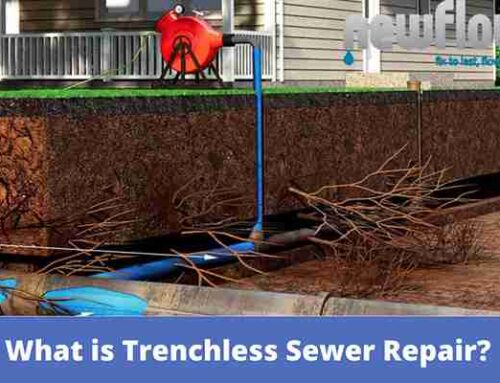
Sewer pipe lining (Cured-In-Place Pipe, or CIPP) is a minimally-invasive trenchless repair method. We insert a flexible liner coated with epoxy resin into the old pipe and inflate it. Once cured, it creates a seamless, durable new pipe within the old one.
Benefit: This method completely seals all existing cracks and holes, making it impossible for tree roots to penetrate the pipe again.
Learn more about: How To Replace Sewer Pipe
Pipe Bursting (Full Pipe Replacement)
Pipe bursting is another trenchless method used when the pipe is too damaged to line. A new pipe is pulled through the old pipe’s path, simultaneously breaking the old pipe apart and replacing it with a brand-new, root-resistant pipe.
Why You Need a Professional Sewer Camera Inspection
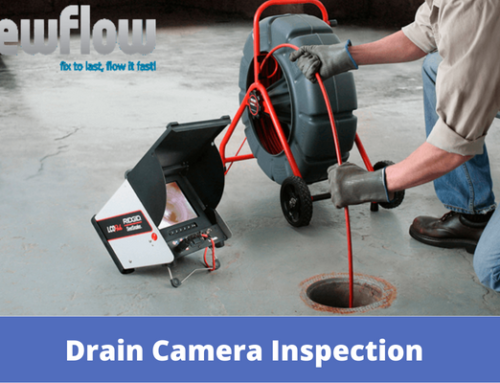
If you suspect any sewer line issue, the absolute best first step is to contact a professional for a sewer camera inspection because it is the only non-destructive way to obtain a precise visual diagnosis of the problem. This quick, 30-minute procedure involves feeding a high-definition camera into the line to immediately pinpoint the exact location and extent of root intrusion, cracks, or pipe collapse, eliminating guesswork and providing the necessary information to recommend the most cost-effective and permanent solution (whether that be pipe lining or full replacement).
Conclusion:
Since tree roots can eventually break your pipes and lead to costly sewer replacement, catching the problem early is crucial. If you are experiencing gurgling sounds, slow drains, or persistent clogs, these are clear signs the pipe damage requires professional attention. At New Flow Plumbing, we specialize in non-destructive diagnosis via sewer camera inspection to accurately locate and assess the root intrusion. As trenchless pipe repair experts, we offer definitive, permanent solutions (like sewer pipe lining) to stop roots from returning forever. Don’t rely on temporary fixes; contact us today to protect your plumbing system with a lasting repair suggested by the experts.
FAQs

Arman Grigoryan
Founder & President of New Flow Plumbing
Arman Grigoryan is the founder and president of New Flow Plumbing, proudly serving Los Angeles, Sacramento, and surrounding areas. With extensive experience in plumbing diagnostics, he leads a skilled team specializing in advanced sewer and drain camera inspections to quickly identify problems and deliver lasting solutions. Arman is dedicated to using the latest technology to provide reliable service, honest answers, and dependable results for every customer.