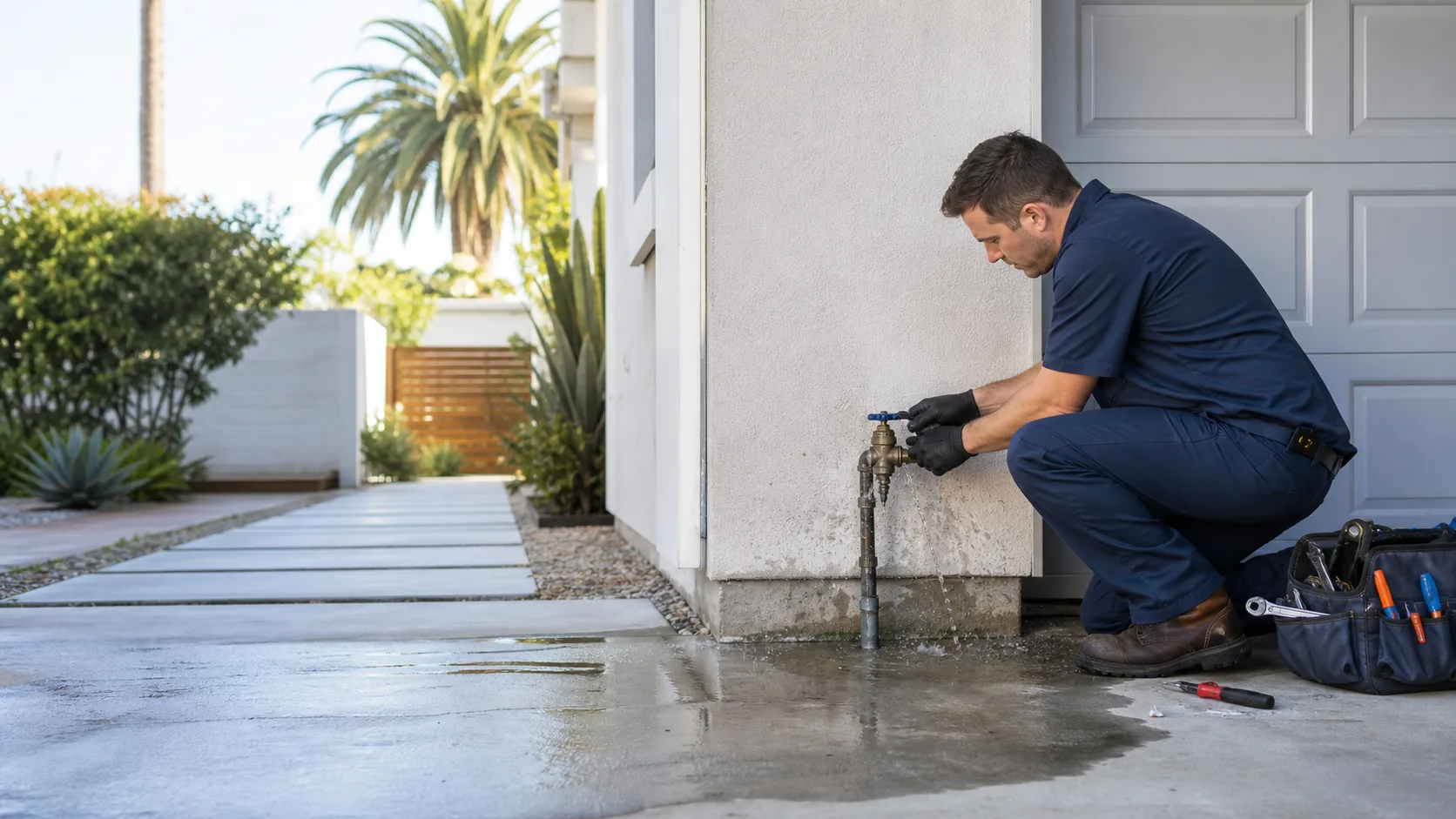
Find and test your main water shutoff Five minutes now can save thousands during a burst pipe. Do this before you need it.
Look where the line enters. Check near the water meter at the curb, in the garage, a utility room, or on an exterior wall facing the street.
Identify the valve type. A round handle (gate valve) turns several times; a lever (ball valve) turns a quarter turn.
Test it gently. Turn clockwise to close, open a faucet to confirm the water stops, then reopen fully.
Label it. Tag the valve so everyone in the house can find it in a hurry.
If the valve is seized or leaks when turned, stop. Do not force it. A replacement valve is a quick, inexpensive job.
Clean a faucet aerator Weak or uneven flow from one faucet is often mineral buildup in the aerator at the tip.
Plug the drain. So small parts cannot fall in.
Unscrew the aerator. Turn it counterclockwise by hand; wrap it in a cloth if you need pliers so the finish is not scratched.
Soak in white vinegar. Twenty to thirty minutes loosens scale. Brush gently with an old toothbrush.
Rinse and reinstall. Keep the parts in order, screw it back on hand-tight and test the flow.
If flow is weak at every faucet, the problem is not the aerator. It may be pressure, a valve or the supply line.
Clean a shower head Clogged nozzles cause weak, spraying or uneven showers, especially with hard water.
Bag it with vinegar. Fill a plastic bag with white vinegar, secure it over the head with a rubber band and soak for an hour or two.
Scrub the nozzles. Rub rubber nozzles with your fingers or a soft brush to break loose the scale.
Run hot water. Flush the head for a minute to clear the loosened deposits.
Check the connection. If it drips where it meets the arm, the washer or thread seal may need replacement.
Corroded shower arms or leaks inside the wall are not DIY jobs. Call before water damages the wall.
Safe first checks on your water heater A quick look can catch problems early. Look, do not take anything apart.
Look for water at the base. Moisture under the tank or rust streaks can mean a leak starting.
Check the discharge pipe. Water dripping from the relief valve pipe means the valve opened or is failing.
Listen. Popping or rumbling usually means sediment buildup on the bottom of the tank.
Note the age. The manufacture date is on the label. Older units deserve a closer look.
Never relight a water heater if you smell gas. Leave, then call SoCalGas or 911 from outside. Do not open gas or electrical compartments.
Use the right plunger Most failed plunging is the wrong tool for the drain.
Flat cup for sinks and tubs. A flat rubber cup seals on flat drain openings.
Flange plunger for toilets. The extended flange seals inside the toilet drain opening.
Seal and push gently. Start slow to push air out, then use firm strokes while keeping the seal.
Stop after a few tries. If it does not clear, repeated plunging can push water over the rim.
If plunging one fixture makes another drain bubble or back up, the problem is likely the main line. Stop and call.
Chemical drain cleaner or a professional cleanout? Know when a simple clog is different from a main line problem.
One slow drain. Usually a local clog of hair or soap. Try the aerator, stopper and trap first, or a plunger.
Several drains slow. Points to the main line. Chemicals will not reach or fix it.
Water coming up a drain. A main line backup. Stop using water and call.
Recurring clogs. Buildup or roots in the line. Hydro jetting and a camera inspection find the cause.
Do not pour chemical drain cleaner into a backed-up line. It sits in the pipe, can damage older lines, and is a hazard for whoever opens the drain.