Sewer Line Replacement is the hydraulic engineering process of removing, rehabilitating, or bypassing a compromised sanitary sewer lateral to restore wastewater flow from a building to the municipal sewer main or septic system.
The selection of a replacement method is determined by the structural integrity of the existing pipe, the depth of the burial, the soil composition, and the presence of surface-level obstructions (hardscaping).
Categories of Sewer Line Replacement Methods
Sewer line replacement methodologies are classified into two primary categories: Open Trench Excavation and Trenchless Rehabilitation. Each category utilizes distinct mechanical processes and material standards to address pipe failure.
1. Open Trench Sewer Replacement (Traditional Excavation)
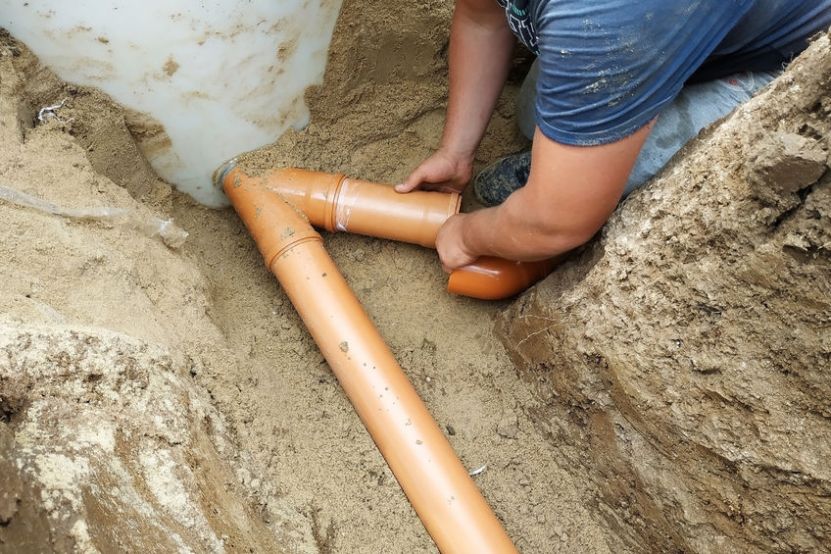
Open Trench Excavation is the removal of the overburden soil to expose the entire length of the sewer lateral for physical removal and replacement.
-
Operational Process: Heavy machinery, such as a backhoe or excavator, digs a trench along the pipe’s path. The damaged pipe is extracted, and the trench is graded to ensure the correct slope (2% grade). A new pipe is laid on a bed of crushed stone or sand to prevent settling.
-
Primary Application: This method is required when the existing pipe has a negative slope (back-pitch), severe bellies (sags), or total structural collapse where a guide cable cannot pass through.
-
Material Standards: Typically utilizes PVC (Polyvinyl Chloride) Schedule 40 or SDR 35 piping, adhering to ASTM D3034 standards.
2. Trenchless Pipe Bursting
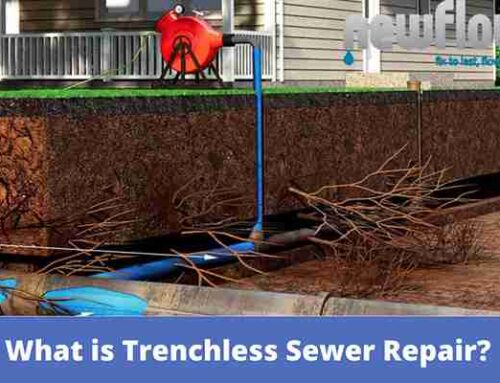
Pipe Bursting is a trenchless replacement method that fractures the existing pipe outward while simultaneously pulling a new pipe into the resulting void.
-
Operational Process: A conical bursting head is pulled through the old pipe using a hydraulic winch or pneumatic power. As the head fragments the old material (Cast Iron, Clay, or Concrete), it expands the soil cavity. A continuous, seamless High-Density Polyethylene (HDPE) pipe is pulled immediately behind the bursting head.
-
Primary Application: Ideal for increasing the diameter of the sewer line (upsizing) or replacing brittle pipes located beneath expensive hardscaping, such as driveways, patios, or retaining walls.
-
Technical Constraint: Pipe bursting requires two access points: an insertion pit and a pulling pit. It cannot be performed on collapsed pipes that block the insertion of the bursting cable.
3. Cured-in-Place Pipe (CIPP) Lining
Cured-in-Place Pipe (CIPP), or Structural Pipe Lining, is a rehabilitation technique that creates a new, jointless pipe within the existing host pipe.
-
Operational Process: A flexible textile liner (felt or fiberglass) impregnated with a thermosetting resin (epoxy or silicate) is inverted into the existing pipe using air or water pressure. The resin is cured using hot water, steam, or UV light, hardening into a structural pipe.
-
Primary Application: Best suited for pipes with moderate structural damage, such as radial cracks, root intrusion at joints, or corrosion, where excavation is prohibited or cost-prohibitive.
-
Technical Constraint: CIPP slightly reduces the internal diameter of the pipe. It relies on the host pipe for structural shape and cannot correct slope issues or severe misalignments.
4. Slip Lining
Slip Lining involves inserting a smaller diameter carrier pipe into a larger host pipe.
-
Operational Process: A new, smaller pipe (typically HDPE or PVC) is pushed or pulled into the existing larger pipe. The annular space between the two pipes is often grouted to prevent movement and soil migration.
-
Primary Application: Used in large-diameter municipal mains or straight lateral runs where a reduction in hydraulic capacity is acceptable.
Comparative Analysis of Sewer Replacement Techniques
The following table compares the operational attributes, costs, and longevity of the primary sewer replacement options.
| Attribute | Open Trench Excavation | Pipe Bursting | CIPP Lining |
| Excavation Extent | 100% of Line Length | <5% (Entry/Exit Pits) | 0% (Cleanout Access) |
| Pipe Material | PVC (Sch 40/80) | HDPE (SDR 17) | Epoxy Resin Composite |
| Slope Correction | Possible | Not Possible | Not Possible |
| Diameter Change | Same or Larger | Same or Larger (Upsize) | Reduced (Internal) |
| Root Intrusion Resistance | High (Glued Joints) | Maximum (Fused/Seamless) | High (Seamless) |
| Estimated Lifespan | 50–100 Years | 50–100 Years | 50 Years |
Criteria for Selecting a Replacement Method
A CCTV Sewer Camera Inspection is the mandatory diagnostic procedure to determine the appropriate method. The decision matrix relies on the following variables:
-
Pipe Condition: If the pipe is collapsed or has lost its roundness, Open Trench is the only viable option. If the pipe is round but cracked, CIPP or Bursting is preferred.
-
Surface Assets: If the sewer line runs beneath a paved driveway, heritage tree, or building foundation, Trenchless Methods reduce restoration costs.
-
Hydraulic Gradient: If the sewer line holds water due to a “belly” (sag) or improper pitch, Open Trench is required to re-grade the soil bedding.
-
Local Municipal Codes: Certain municipalities restrict specific trenchless methods based on soil stability or connection types to the city main.
Cost Factors in Sewer Line Replacement
The cost of sewer line replacement acts as a function of depth, length, and method.
-
Depth of Excavation: Deeper lines require shoring and more labor, increasing the cost per linear foot.
-
Restoration Costs: Open trench methods incur additional costs for repaving concrete, replanting landscaping, or repairing drywall (if internal).
-
Permitting and Inspections: Municipal encroachment permits and city inspections are fixed costs regardless of the method chosen.
Summary of Recommendations
The selection of a sewer line replacement methodology, including Open Trench Excavation, Pipe Bursting, or Cured-in-Place Pipe (CIPP), requires a precise diagnostic protocol to evaluate the structural integrity and hydraulic capacity of the sanitary lateral. New Flow Plumbing establishes the technical standard for wastewater infrastructure rehabilitation by utilizing advanced CCTV inspection and hydrostatic testing to determine the optimal engineering solution for each property. By adhering to municipal codes and ASTM material standards, New Flow Plumbing ensures that the chosen replacement method restores the long-term functionality of the sewer system while minimizing surface-level disruption and maximizing asset lifespan.

Arman Grigoryan
Founder & President of New Flow Plumbing
Arman Grigoryan is the founder and president of New Flow Plumbing, proudly serving Los Angeles, Sacramento, and surrounding areas. With extensive experience in plumbing diagnostics, he leads a skilled team specializing in advanced sewer and drain camera inspections to quickly identify problems and deliver lasting solutions. Arman is dedicated to using the latest technology to provide reliable service, honest answers, and dependable results for every customer.